You would like to invest in this artist?
Krishna Reddy
ABOUT
Krishna Reddy traveled to Europe, where from 1951 to 1952 he studied art at the Slade School of Fine Arts, University of London.
Painter | Sculptor | India
Born in 1925
Died in 2018
You would like to invest in this artist?
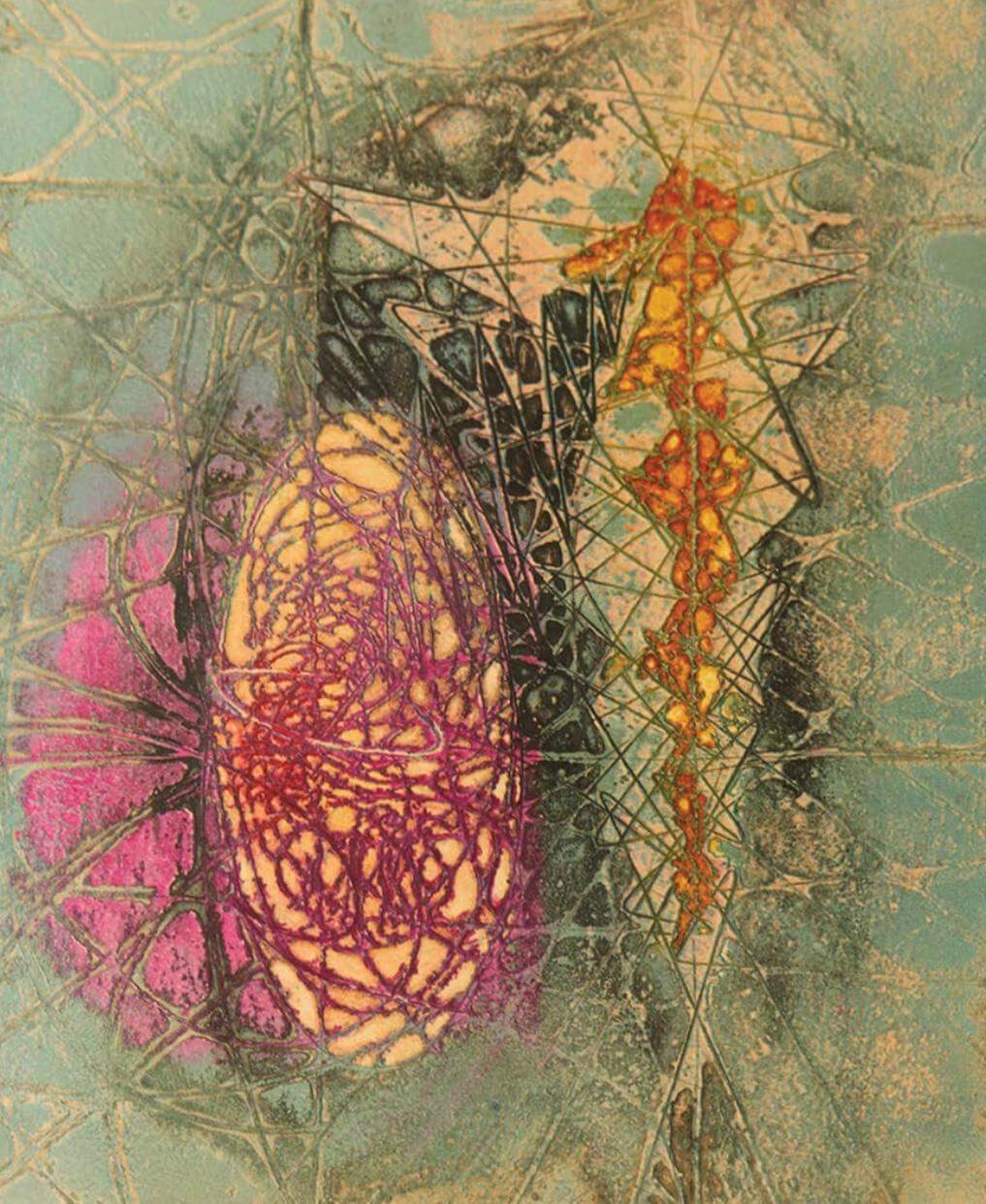
Krishna Reddy was a world-renowned master of printmaking and sculpture, celebrated for his revolutionary contribution to the technical and aesthetic evolution of the medium. Born in Chittoor, Andhra Pradesh, he studied at Santiniketan under Nandalal Bose before moving to Europe, where he worked alongside icons like Giacometti and Henry Moore. However, his most significant impact occurred at Atelier 17 in Paris, where he served as associate director and collaborated with Joan Miró and Pablo Picasso. Reddy is best known for pioneering the technique of multicolor viscosity printing. Before his intervention, printing multiple colors required separate plates for each hue. Reddy discovered that by manipulating the oil content and tackiness of different inks, he could apply multiple colors to a single intaglio plate. This allowed for a complex, layered luminosity that mirrored the organic textures of nature. His works, such as the iconic "Clown" and "Spider Web" series, are characterized by a semi-abstract, rhythmic energy that explores the mathematical and spiritual structures of the natural world. Beyond his technical brilliance, Reddy was a dedicated educator, heading the graphics department at New York University for decades. His philosophy viewed the artist as a scientist of the soul, seeking to uncover the hidden symmetries of the universe. A recipient of the Padma Shri, his legacy remains foundational to modern printmaking, transforming a mechanical process into a deeply meditative and expressive art form. His canvases and plates are prized for their intricate textures and their ability to capture the vibrational essence of life.