You would like to invest in this artist?
J. Swaminathan
ABOUT
Served as the director of its Roopankar Art Museum till 1990
Painter | India
Born in 1928
Died in 1994
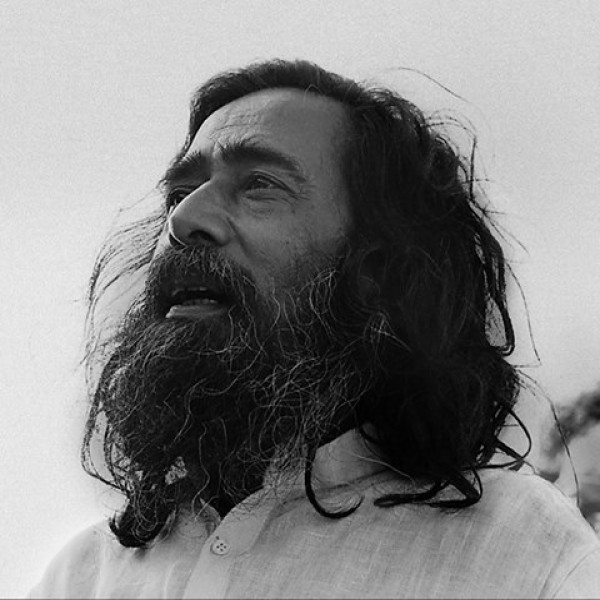
You would like to invest in this artist?
Jagdish Swaminathan, popularly known as J. Swaminathan, was a seminal figure in Indian Modernism who sought to dismantle the hegemony of Western aesthetic models in favor of an indigenous, "non-representative" visual language. A co-founder of the influential Group 1890, he famously drafted its manifesto, which rejected the pastoral and sentimental tropes of the Bengal School and the derivative abstraction of the West. His philosophy was rooted in the idea that art is a "numinous" experience—a spontaneous, mystical act rather than a calculated imitation of reality. His most iconic body of work is the "Bird, Mountain, and Tree" series. In these canvases, Swaminathan utilized flat, saturated planes of color to create a surreal, meditative space where a solitary bird or a hovering mountain became symbols of a primordial, spiritual universe. These works reflect his deep engagement with Pahari miniatures and folk traditions, emphasizing the "geometry of the unknown." His use of bright, unmixed pigments—saffrons, yellows, and deep reds—imbued his paintings with a quiet, vibrational energy. Beyond his personal practice, Swaminathan was a visionary institution-builder. As the director of Roopankar Museum at Bharat Bhavan in Bhopal, he played a transformative role in integrating tribal and contemporary art, famously discovering the Gond master Jangarh Singh Shyam. By elevating tribal art to the same status as urban modernism, he fundamentally reshaped the discourse of Indian art history. His legacy remains a testament to the search for a truly decolonized, spiritual modernism.