You would like to invest in this artist?
Abani Sen
ABOUT
Founded The Young Artists Union and later Art Rebel Centre in Calcutta.
Painter | India
Born in 1905
Died in 1972
You would like to invest in this artist?
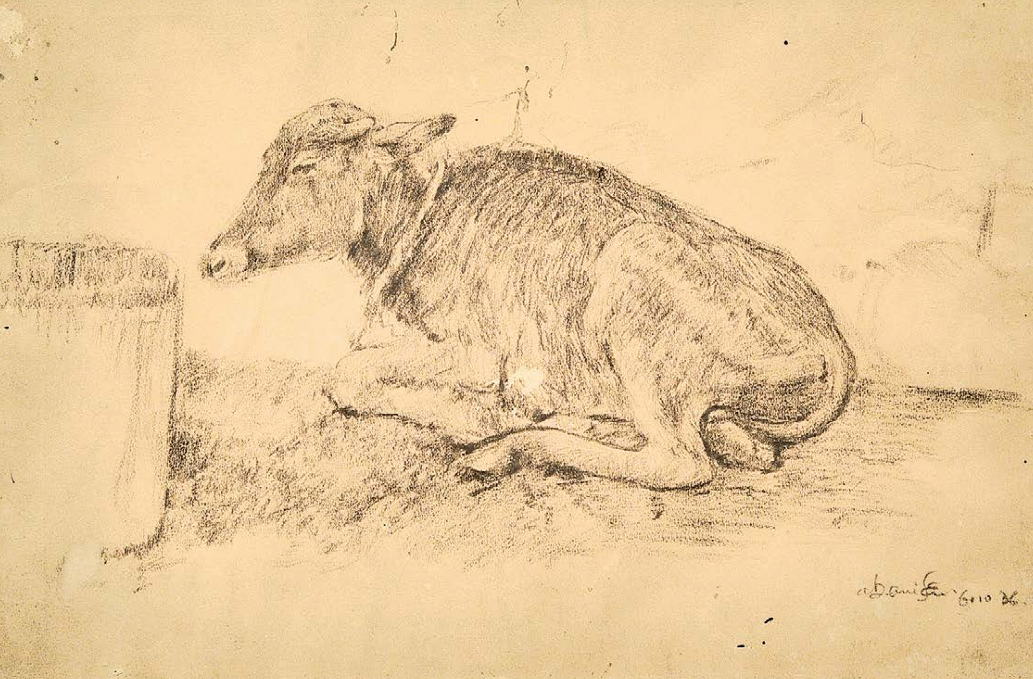
Abani Sen remains a seminal figure in the evolution of Indian Modernism, revered for his technical mastery and his role as a bridge between the traditional Bengal School and the radical shifts of the mid-20th century. Born in Dhaka, Sen’s artistic journey was marked by an early proficiency in academic realism, which he later distilled into a fluid, expressionistic language characterized by a profound rhythmic vitality. His work is most frequently recognized for its depiction of animal life—particularly bulls, horses, and birds—which he rendered with a sense of raw, muscular energy. Unlike the delicate, wash-heavy approach of his predecessors, Sen utilized bold, sweeping lines and a vibrant palette to capture the essential spirit of his subjects. His ability to convey movement was unparalleled; a few charcoal strokes could evoke the immense weight of a charging bull or the delicate flutter of a sparrow. Beyond his personal practice, Sen was a pivotal educator and a founding member of the "Young Turks," a group that sought to move away from the sentimentalism of the traditional nationalist style. His influence extended through his long tenure at various art institutions, where he mentored a generation of artists including F.N. Souza. Despite living much of his life in relative austerity, his commitment to pure painting over commercial success earned him the deep respect of his peers. Today, his canvases are prized for their structural integrity and their ability to translate the grit of everyday Indian life into a timeless, lyrical visual experience.